

MortgageWise Newsletter – Spring 2026
Mortgage News and Updates – Spring 2026
Get the latest mortgage industry news. CLICK HERE.
-Economy & Mortgages: Mortgage Rate Outlook: Improved Momentum and Opportunity
-Put Your Home Equity to Work
-Buying Before Selling: The Modern Bridge Strategy
-Refinancing in 2026: It’s Not Just About the Rate
-Waiting for the Perfect Mortgage Rate?
Economy & Mortgages: Mortgage Rate Outlook: Improved Momentum and Opportunity
The housing market entered 2026 with renewed optimism. In February, mortgage rates dipped below the 6% threshold for the first time in over three years, triggering an 11% jump in mortgage applications. Inventory is also beginning to build as we approach the Spring selling season, signaling a healthier and more active market.
More recently, geopolitical tensions have introduced some uncertainty, pushing mortgage rates back up into the low-6%’s. While that has tempered some of the early momentum, it hasn’t changed the broader trajectory. Today’s rate environment remains meaningfully improved from the highs of the past two years, and demand continues to respond when conditions improve.
Looking ahead over the next six months, mortgage rates are expected to remain relatively “sticky” in the low 6%’s. Inflation risks—driven in part by energy prices moving back above $100 per barrel—may limit how quickly rates decline, and the Federal Reserve has taken a cautious, data-driven stance. Where we thought we might see the Fed lower the Fed Funds Rate two more times this year, now that’s looking unlikely (unless we see a recession). That said, even a stable rate environment provides a more predictable backdrop for both buying and selling.
Inventory trends are also evolving. While some homeowners with 3%–4% mortgages are pausing their plans due to rate volatility, overall inventory is still up roughly 10% year-over-year. Even modest increases in supply can improve buyer choice, reduce competitive pressure, and create more balanced conditions.
Home price growth is expected to remain modest, likely in the 1%–2% range nationally. However, the market continues to vary by region. Parts of the Sun Belt and West—where new construction has been more active—are seeing some price softening, while supply-constrained markets in the Northeast and Midwest continue to show resilience and firm pricing.
There are, of course, uncertainties that could influence the path forward—from global events to Federal Reserve policy, leadership changes, and broader economic shift. But housing has consistently shown an ability to adapt. Strong homeowner equity, steady underlying demand, and long-term supply constraints continue to provide meaningful support.
In summary, this is not a stalled market – it’s a gradually transitioning one. While short-term volatility may persist, the foundation remains solid. With the right strategy, both buyers and homeowners can move forward with confidence and take advantage of opportunities as they arise.

Put Your Home Equity to Work
If you’ve owned your home for a while, you may be sitting on substantial equity. Here are five ways to put it to work
Eliminate Mortgage Insurance: If your loan-to-value has dropped below 80%, you may be able to remove PMI instantly lowering your monthly payment.
Home Improvements: Strategic upgrades like kitchens, bathrooms, or energy-efficient features can enhance your lifestyle while boosting long-term value.
Consolidate High-Interest Debt: Replacing credit cards or personal loans with lower-rate financing can reduce interest costs and improve cash flow.
Bridge to Your Next Home: Equity can help fund your next purchase before selling your current home (see the article to the right for another idea).
Create a Financial Safety Net: A home equity line can provide flexible access to funds when needed, often with minimal cost to maintain.
Every situation is unique. Contact us to discuss structuring your equity in a way that supports your goals.

Buying Before Selling: The Modern Bridge Strategy
Imagine, one day you happen to stumble upon the home of your dreams, and there’s a For Sale sign out front. Now, you’re facing the classic catch-22: you’re still living in your current home, and you need the equity from it to make the down payment on the dream home. Waiting until it sells could mean missing the opportunity.
That’s Where a Bridge Strategy Comes In
A bridge loan is short-term financing that allows you to access your home equity before your current property sells. These loans are typically structured for 6–12 months, often with interest-only payments to keep costs manageable. The goal is simple: give you the liquidity to purchase your next home, then pay off the bridge loan once your current home sells.
The bridge strategy helps you avoid the problems associated with selling first, then buying—settling for what’s on the market once your current home sells, or moving everything into a rental while you wait for the perfect home to come along.
A Variety of Strategies
Bridge financing comes in various flavors, in the form of short-term loans, financing to be able to make a cash-backed offer without selling your current home, or to buy now and refinance later. In most cases, the bridge loan is sized to cover the equity you’ve built—often used for the down payment, and in some structures, to even pay off your existing mortgage. All are designed to let you buy first, then sell second.
What if You Don’t Secure the New Home?
Bridge financing is typically arranged alongside a specific purchase plan. If you don’t end up going under contract, the bridge loan usually isn’t finalized or funded, or it’s extendable for a fee—so you’re not taking on debt unnecessarily. The strategy is designed to activate when you’re ready to move forward.
What If Your Current Home Takes Longer to Sell?
Bridge loans are designed with time in mind, but it’s important to plan for this scenario. Most include a built-in time window (commonly up to 12 months), and pricing strategies on your current home can help ensure a timely sale. In addition, many borrowers have flexibility to adjust—whether that means making payments for a longer period, refinancing, or modifying the plan if needed. The key is building in a margin of safety upfront.
Bridge Loans vs. HELOCs: A Key Difference
Why not use a home equity line of credit instead? When it comes down to qualification. With a HELOC, lenders must count your current mortgage, the HELOC payment, and the new home payment, all at once. Bridge loans are often underwritten differently. Because they are tied to the sale of your current home, lenders can exclude that existing payment. Instead, qualification is typically based on the new home payment plus the bridge loan.
The Bottom Line
Bridge strategies give homeowners flexibility, leverage, and control over timing. Instead of rushing to sell or missing out on the right home, you can move forward with a plan. If you’re considering a move, a quick review of your equity and options can help determine whether a bridge strategy is the right fit.
Refinancing in 2026: It’s Not Just About the Rate
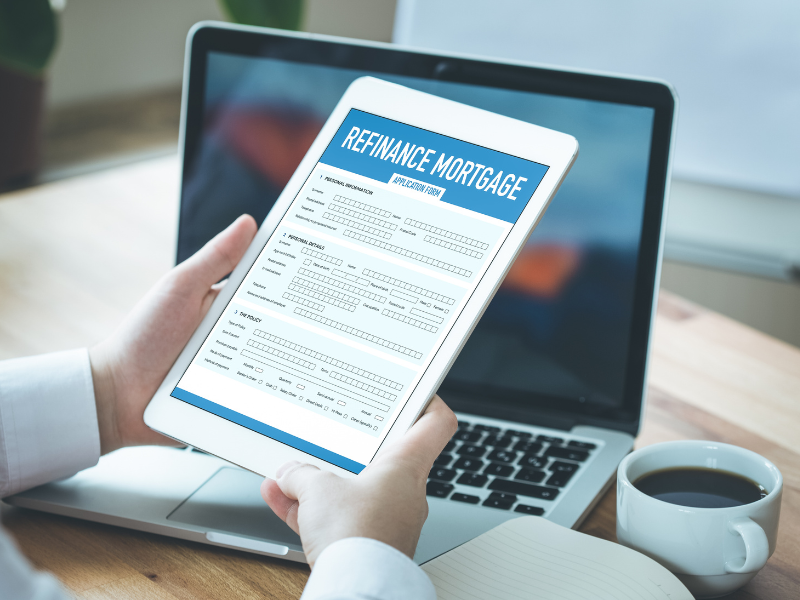
Refinancing is often viewed through one lens: interest rates. But today, it’s better understood as a strategic tool, one that can reshape your financial picture and align your mortgage with your long-term goals. With many homeowners holding low rates from recent years, refinancing decisions now go beyond “Is my rate lower?” to a more important question: What does this accomplish for me?
Accelerating Financial Freedom
For some homeowners, the goal isn’t a lower payment. It’s a faster path to being debt-free. Shortening your loan term—from 30 years to 15 or even 10—can significantly reduce total interest paid while accelerating equity growth. This strategy can position you to own your home outright ahead of major life transitions like retirement or career changes.
Consolidating Higher-Cost Debt
Mortgage financing is often among the lowest-cost debt available. A refinance can allow you to consolidate higher-interest obligations, such as credit cards or personal loans—into a single, more manageable payment. This can improve monthly cash flow, simplify finances, and reduce overall interest costs, freeing up resources for savings or investment.
Optimizing Monthly Cash Flow
In other cases, the goal is flexibility. Refinancing into a longer-term loan can reduce required monthly payments, creating room in the budget for other priorities—whether that’s starting a business, funding education, or adjusting to a change in income. Additionally, rising home values may allow you to eliminate mortgage insurance, creating immediate monthly savings without relying on a lower interest rate.
Investing in Your Home…and Your Future
Refinancing can also be used to access equity for renovations or improvements. Beyond enhancing day-to-day living, these upgrades can help protect and increase the long-term value of your home. For many homeowners, this is an alternative to moving—allowing the home to evolve with changing needs.
In today’s environment, refinancing is less about reacting to rates and more about making intentional financial decisions. A well-structured refinance can improve cash flow, reduce long-term costs, or create new opportunities—depending on your goals.
A quick review can help determine whether refinancing—or simply staying the course—is the right move for you.

Waiting for the Perfect Mortgage Rate?
Waiting for rates to fall below 6% before starting your home search? You might be waiting awhile longer, and recent events are a reminder of how unpredictable that strategy can be. After briefly dipping, mortgage rates have moved back up into the low 6% range, highlighting how quickly conditions can change.
Waiting Often Costs More
When rates eventually decline, demand tends to surge as sidelined buyers re-enter the market. That increased competition often pushes home prices higher, offsetting much of the benefit of a lower rate.
Timing the market is also difficult. As we’ve seen, global events and economic data can shift rates quickly, making it hard to predict when the “right” moment will arrive. And while inventory has improved, the right home that truly fits your needs still doesn’t stay available for long.
The Built-In Flexibility
Mortgage financing offers an important advantage: flexibility. If rates decline meaningfully in the future, refinancing may allow you to capture a lower rate later. What you can’t change is the purchase price of the home you pass up today.
The goal isn’t to perfectly time interest rates — it’s to secure the right home with a payment that works for you. With the right strategy, you can move forward confidently today while still keeping options open for tomorrow. That’s what we’re here to help with.
Copyright © 2026 Myers Capital Virginia