


The Snowball Strategy: Using Cross-Collateralization to Scale Your Real Estate Portfolio
Building a real estate portfolio is rarely a straight line. For most investors, growth can slow the moment their available capital is fully deployed. Every dollar is tied up in existing properties, and acquiring the next deal means waiting for a sale to close, taking on expensive unsecured debt, or sitting on the sidelines while opportunities pass.
But what if the equity sitting dormant in your existing properties could be put to work immediately? Cross-collateralization is a powerful, yet underutilized financing strategy that allows real estate investors to leverage multiple properties as combined collateral for a single bridge loan, unlocking capital that would otherwise remain inaccessible.
When used strategically, it creates a compounding effect that accelerates portfolio growth — a snowball rolling downhill, gaining size and momentum with every deal.
What Is Cross-Collateralization?
Cross-collateralization is a lending structure in which two or more properties are pledged as collateral to secure a single loan. Rather than evaluating the loan-to-value ratio of one property alone, the lender considers the combined equity across all pledged assets. This approach allows borrowers to access significantly more capital than a single-property loan would permit.
To understand the practical impact, consider a simple example. An investor owns a free-and-clear land parcel valued at $500,000 and a property under construction valued at $800,000 with an existing $400,000 loan. On a standalone basis, the construction property may not support the full amount of additional financing needed.
By cross-collateralizing both assets, however, the lender can evaluate a combined equity position of approximately $900,000 — dramatically expanding the investor's borrowing capacity without requiring them to sell either asset.
This strategy is particularly effective for investors who hold free-and-clear properties — assets with no existing mortgage — that are generating little to no immediate return. Instead of selling these assets to raise cash, cross-collateralization allows investors to borrow against their combined value while retaining full ownership of every property in the portfolio.
For direct private lenders like Myers Capital, this approach is a natural fit. Because our underwriting is asset-based rather than income-based, we evaluate the total equity picture across a borrower's portfolio and structure creative solutions that conventional lenders simply cannot offer.
Why Conventional Lenders Fall Short
Traditional banks and institutional lenders are generally unwilling to cross-collateralize properties, particularly across different asset types, locations, or ownership structures. Their underwriting systems are designed to evaluate each loan in isolation, and the complexity of managing multiple collateral assets falls outside their standard processes.
This leaves many investors in a frustrating position: they have substantial equity across their portfolio but no practical way to access it without selling assets or waiting for a conventional cash-out refinance — a process that can take 60 days or more and may not even be available for certain property types such as vacant land, mid-construction homes, or non-warrantable condominiums. Private bridge lenders fill this gap by taking a holistic view of the borrower's asset base and structuring loans that reflect the true strength of their overall position.
Furthermore, conventional lenders are constrained by strict debt-to-income requirements and loan limits that often prevent experienced investors from accessing additional financing — even when their equity position is strong.
A private bridge lender evaluates the deal on its merits: the quality of the collateral, the borrower's experience, and the viability of the exit strategy. This flexibility is what makes cross-collateralized bridge loans such a powerful tool for scaling a portfolio.
Real-World Scenarios: The Snowball Strategy in Action
The following examples are drawn from deals recently funded by Myers Capital, illustrating how cross-collateralization enables investors to unlock capital and accelerate their growth.

Scenario 1: Funding a Construction Project with Land Equity in Kealakekua, Hawaii
A real estate investor on the Big Island of Hawaii needed to retire an existing loan on a property under construction and simultaneously fund 100% of a $440,000 construction budget to complete the home. The subject property alone did not provide sufficient equity to support the full loan amount required.
The Solution: The borrower pledged a free-and-clear land parcel as additional collateral alongside the subject property. By cross-collateralizing both assets, Myers Capital structured a $1,000,000 bridge loan with a construction holdback. The combined loan-to-value was a conservative 46.86% at current value, rising to 54.50% at the projected after-repair value.
The existing loan was retired, the full construction budget was funded, and the investor retained ownership of both properties. The exit strategy is to sell the completed home upon construction completion, at which point the bridge loan will be repaid in full.
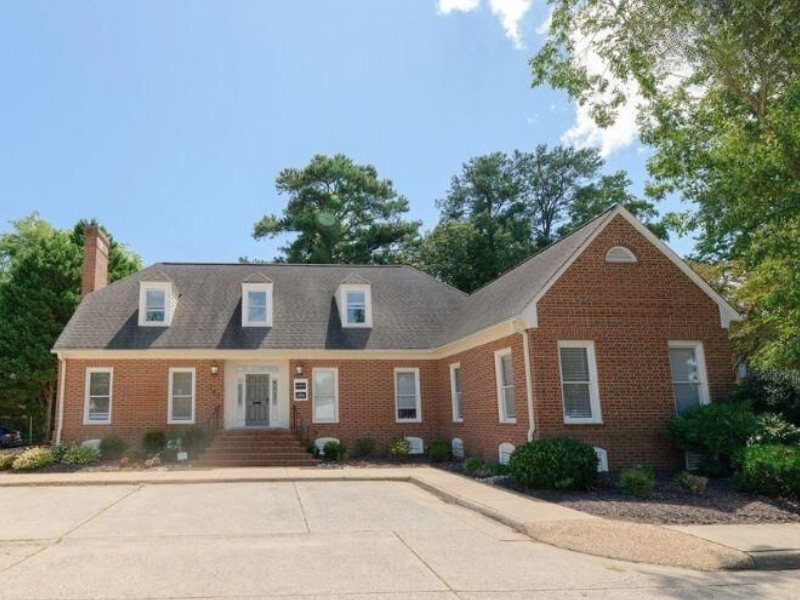
Scenario 2: Repositioning a Mixed-Use Asset in Newport News, Virginia
An investor owned a mixed-use property in Newport News, Virginia that required a significant $469,150 renovation to reposition it for commercial and event use. The subject property alone did not generate enough equity to support the full scope of the project, leaving the investor short of the capital needed to execute their vision.
The Solution: The borrower pledged a free-and-clear condominium as additional collateral. With the combined equity of both assets, Myers Capital structured a $1,136,000 bridge loan that funded 100% of the renovation budget. The combined loan-to-value was 44.58% at current value and 49.39% at the projected after-repair value.
With the full renovation budget secured, the investor completed the repositioning of the asset, unlocking its potential as a premium commercial and event venue. The exit strategy is a future sale or long-term takeout refinance once the property is stabilized and generating consistent revenue.

Scenario 3: Completing Luxury Finish Work with a Second Mortgage in Kamuela, Hawaii
A team of experienced home builders on the Big Island of Hawaii had completed five ground-up construction projects in just two years. On their latest project — a high-end single-family home in Kamuela — they needed $500,000 to fund final finish work and furnishings to maximize the property's sale potential. The home already carried a first mortgage, limiting the equity available on a standalone basis.
The Solution: Myers Capital funded a $500,000 second mortgage cash-out loan secured by the property. The combined loan-to-value across both the first and second mortgage was a conservative 45.5%, based on an estimated property value of $6,550,000.
The funds allowed the builders to complete the finish work and furnish the home to the standard expected by luxury buyers, directly enhancing its marketability and sale price. The exit strategy is to sell the property upon completion.
This deal highlights an important variation of the cross-collateralization concept: using a second mortgage to access equity in a high-value asset that is already encumbered, without disturbing the existing first mortgage. For experienced builders and developers working on high-value properties, this structure provides the final capital injection needed to maximize returns.
The Compounding Effect: How the Snowball Grows
What makes cross-collateralization particularly powerful is its compounding nature. Each successful project funded through this strategy creates a new, more valuable asset that can, in turn, serve as collateral for the next deal.
Consider the sequence: an investor uses a free-and-clear land parcel to fund the construction of a new home. Upon completion and sale, the proceeds retire the bridge loan and generate profit. That profit is reinvested into the next acquisition, which, once stabilized, becomes another free-and-clear asset available for future cross-collateralization. Each deal feeds the next, and the portfolio grows with increasing momentum — this is the snowball strategy, and it is one of the most effective tools available to serious investors who want to scale without liquidating their existing holdings.
The key insight is that idle equity is not neutral — it represents an opportunity cost. Every month that a free-and-clear property sits unencumbered is a month its equity is not generating a return. Cross-collateralization converts that dormant equity into active capital, putting it to work in projects that generate income, appreciation, and long-term wealth.

Key Considerations for Investors
While cross-collateralization is a powerful strategy, it is important to approach it with a clear plan. Because multiple properties are pledged as collateral, the stakes of a failed exit strategy are higher than with a single-asset loan.
Investors should ensure they have a well-defined and realistic path to repayment — whether through a sale, a refinance, or another liquidity event — before entering into a cross-collateralized loan.
It is also essential to work with a lender who has deep experience structuring these transactions. Cross-collateralized bridge loans require careful coordination of title, lien positions, and collateral documentation across multiple properties.
At Myers Capital, we have the expertise and the relationships to manage this complexity efficiently, ensuring that deals close on time and that borrowers fully understand the structure of their financing.

Is Cross-Collateralization Right for You?
Cross-collateralization is best suited for investors who hold multiple properties with meaningful equity — particularly free-and-clear assets — and who have a clear exit strategy for the project being funded. The strategy works across a wide range of scenarios, including new construction, renovation and repositioning, land development, and portfolio expansion.
At Myers Capital, we specialize in structuring creative bridge loan solutions that reflect the full strength of your real estate portfolio. If you have equity sitting dormant in your existing properties and a compelling project on the horizon, we can help you put that capital to work.
Contact Myers Capital Hawaii today to explore how cross-collateralization and our bridge loan programs can help you scale your portfolio faster.
Copyright © 2026 Myers Capital Virginia